Cleveland Whole-House Repipe Plumbers
Many Cleveland homes still run on the cast iron and galvanized lines they were built with a century ago, and those pipes were never meant to last forever. Plumbird replaces aging, rusted, and leaking pipes with modern PVC and PEX. Every job is led by a Local 55-trained owner who knows Ohio plumbing code inside and out. Whether you need one failing section swapped out or a comprehensive whole-house repipe in Cleveland, we’ll show you what’s going on inside your walls and give you a clear quote before any work begins.
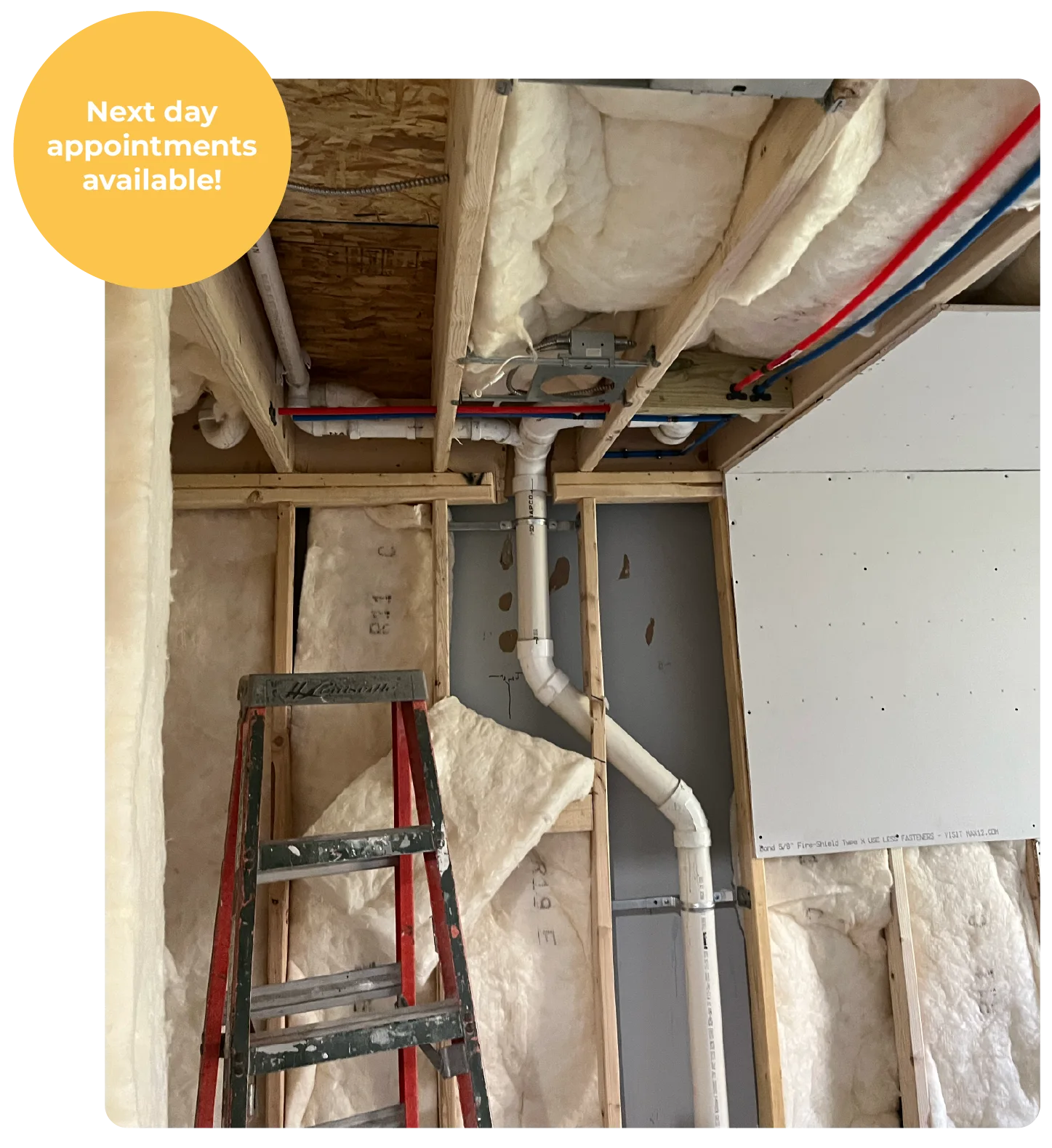
- Next-day availability
- Local 55 expertise
- PVC, PEX, copper & cast iron
- Financing available
Why Homeowners Choose Plumbird for Home Repiping in Cuyahoga County

The Owner is on Your Job Site
Repiping is a major decision, and you shouldn’t be handed off to a rotating crew. Paul, Plumbird’s co-owner, leads every repipe on-site. When you call, our office staff gathers the details about your home and gets you on the calendar, often as soon as the following weekday.

Formal Training That Shows in the Work
We’re licensed Ohio plumbing contractors with certifications in backflow prevention, OSHA 10 and 30, and confined space work. In addition, Paul completed Local 55’s five-year union apprenticeship under a journeyman with 40-plus years in the trade.

Built for Older Housing Stock
Many homes in Cleveland Heights, Shaker Heights, and Euclid are over 100 years old and still run on their original cast iron, galvanized, or clay pipe. Our Cuyahoga County home repiping service covers both drain and water supply lines, from basement mains to less common setups like lines serving an attached garage.

Your Home Gets Treated With Care
Before we cut into anything, we lay down tarps and cover nearby furniture, framed photos, and knickknacks. If something needs to be moved, we’ll ask first, snap a photo of how it was arranged, and put it back exactly where it belongs.
Our Process: 5 Steps to Brand-New Pipes
We start with your exposed piping, usually in the basement where the main water line comes up past the meter. We check for rust, water stains, mold, and odors, then explain what needs replacing and what it will cost. If you book the work, your inspection and estimate fee comes off the final bill.
Once you approve the plan, we give you a heads-up before shutting off the water. Then we drain the lines to relieve pressure. We place drain pans beneath every section we’ll be working on, along with tarps to catch dust and debris.
Pipe along an unfinished basement ceiling can come out without touching the wall. For hidden lines or wet stains on drywall, we cut access openings only where needed. For buried drain lines, we cut through the slab with our own water-cooled concrete saw and dig out the old clay pipe ourselves.
We cut out the failing section with a reciprocating saw and connect the new line with shielded couplings. These fittings seal airtight between materials, like old cast iron and new PVC. Most homeowners choose PVC for drains and PEX for water supply, but we also install copper and cast iron, which offer superior noise reduction.
We turn the water back on, check the pressure, and run every faucet to flush the new lines. Then we test each toilet’s flush and each fixture’s drain speed. We finish by patching any cut concrete with mortar, clearing away the tarps and debris, and returning your belongings to their original spots.
Warning Signs Your Pipes Need Replacing
Aging pipe rarely fails all at once. It usually gives you a few signals first. Here’s what to look for and what each symptom tends to point to:
| Warning Sign | What It Usually Means | What We Recommend |
|---|---|---|
| Rust on exposed pipe or fittings | Galvanized or cast iron corroding from the inside out | Replace the corroded run with PVC or PEX |
| Black mold near walls or ceilings | A slow, hidden leak inside a wall cavity | Locate the leak, open the wall, and replace the damaged section |
| Sewage odor in the basement or living space | A small hole or crack in a drain or sewer line | Find the source and swap out the failing pipe |
| Stains on drywall or ceilings | A current or past leak from a supply line above | Cut a small access point, then repair or repipe |
| Drains that keep backing up in the same spot | Narrow galvanized bends trapping buildup | Replace the problem run so buildup has nowhere to catch |
| Frozen or burst pipes in winter | Aging copper or cast iron that can’t handle Ohio cold | Upgrade to PEX or PVC, which resist freezing |
Pipe Replacement Cost in Cleveland
For homes in Cleveland, pipe replacement costs depend on factors like how many lines need replacing, which materials you choose, and whether we need to open walls or cut concrete to reach them. Replacing a single failing section with PVC can cost as little as a few hundred dollars, while replacing all of a home’s piping with new copper typically costs several thousand. On one recent pipe replacement, we quoted $3,000: $1,500 less than the homeowner’s previous quote. Here’s how we can help make your project more affordable: Your inspection fee, credited back. Your estimate fee is deducted from your invoice when you book our crew for a project.
Typical Service
Get a Quote
Final pricing determined after inspection.
$150 Off
your first service
First-time Plumbird customers save $150 on their first service through December 31, 2026.
12% Off
for teachers, first responders & veterans
Teachers, veterans, and first responders save 12% with a work ID or other proof of employment.
Financing
for larger plumbing projects
Spread the cost of a larger repipe or basement drain replacement into manageable payments.
Not sure whether you’re in our area? Call us!
Proudly Serving Northeast Ohio
Plumbird is a locally-owned repipe plumber in Northeast Ohio, proudly serving homeowners in Cuyahoga, Lake, and Geauga counties. We focus on single-family homes, and can usually begin work on new projects within one to two business days.
Wondering whether we cover your area? Send us a message or call our office at (440) 724-2236.
Cities & towns we cover:
Frequently Asked Questions About Whole-House Repiping
Most residential repipes wrap up in a single visit, ranging anywhere from two to eight hours depending on how many lines we’re replacing. Bigger jobs that involve cutting through a basement slab can take up to two days. Once the work is completed, you can resume using your faucets, showers, and toilets right away.
Galvanized steel corrodes from the inside, which gradually narrows the pipe and can send rust into your water. Its tight 90- and 45-degree fittings also give debris more places to collect, so galvanized systems tend to develop repeat clogs and weaker water pressure. That’s why we recommend galvanized pipe replacement in Ohio homes as soon as corrosion starts showing — before a pinhole leak turns into serious water damage. Contact us right away if you notice any signs of corrosion or leaking, including clogs, odors, or discoloration.
PVC and PEX are plastic, which means they won’t rust. They’re also lightweight, relatively low-cost, and are unlikely to freeze during Ohio winters. The main disadvantage is increased noise: with PVC, you may hear water rushing through the walls when someone flushes. Cast iron and copper require a larger investment, but are nearly silent. We’re happy to help you compare your options during your consultation.
Potentially. Pipes running across an exposed basement ceiling can be replaced without opening any walls or ceilings. However, if there are hidden lines or visible water damage, it may be necessary to make a small access cut. If we notice signs of water coming from another area partway through the project, we’ll point it out and ask whether you want us to investigate further.
It depends on the complexity of the project. For example, you generally don’t need an inspection when swapping a toilet or fixing a small leak in a copper line. However, an inspection will be required if you’re digging up a basement floor in order to replace a drain. City inspections in our area are usually completed within a couple of weeks, and we coordinate that process for you from start to finish.
Not necessarily. A leak that only shows up during heavy rain often comes from the roof rather than the plumbing. If your ceiling was recently leaking, we recommend scheduling an inspection so we can check the pipes above the stain and identify the source of the leak.
Keep an eye out for leaks and pay attention to any unusual smells. We also recommend having your drains snaked twice per year to keep everything flowing freely. For a new PVC or PEX system, that’s usually all the upkeep it needs. If you have any questions about maintenance or ongoing care, reach out to our team for guidance personalized to your home.
Put a Stop to Leaks, Clogs, Odors, and Mold
If you’ve noticed rust in your basement or the same leaks over and over, Plumbird can replace your failing pipes before they cause greater damage. When you call, you’ll speak directly with our team about your home, your options, and a realistic timeline for the work.